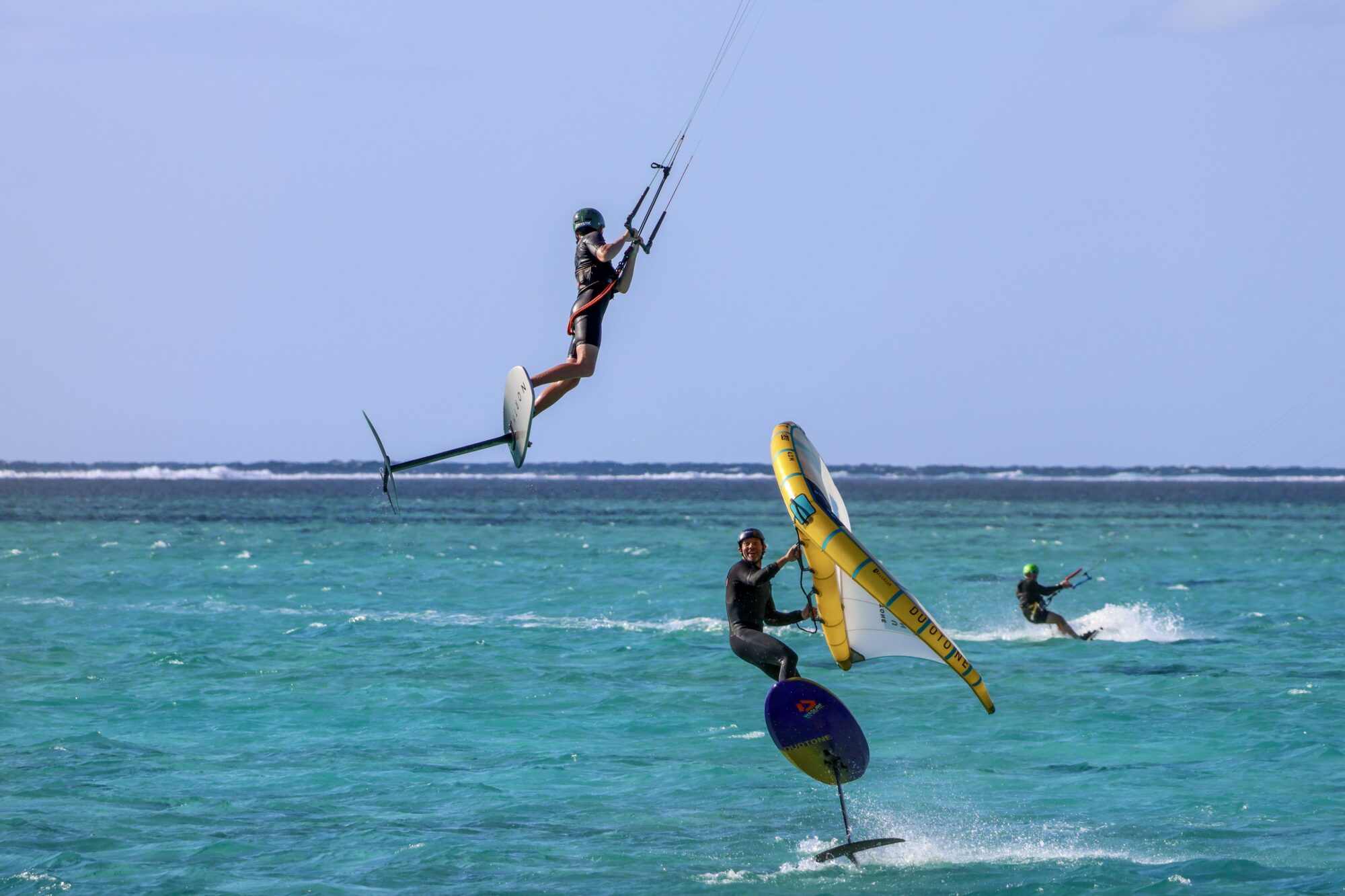
The sport of kiteboarding
What is Kiteboarding?
Kiteboarding is an individual recreational sport played out on open water — ideally with a steady breeze of 16–30 knots doing all the hard work for you. Conditions can be flat or bumpy; either way, the goal is the same: fly a kite in just the right pattern to harness its power and go ripping across the water, upwind, downwind, sideways — all the things sailboats do, minus the boat. There’s no motor involved here. Just you, the wind, and a healthy respect for physics.
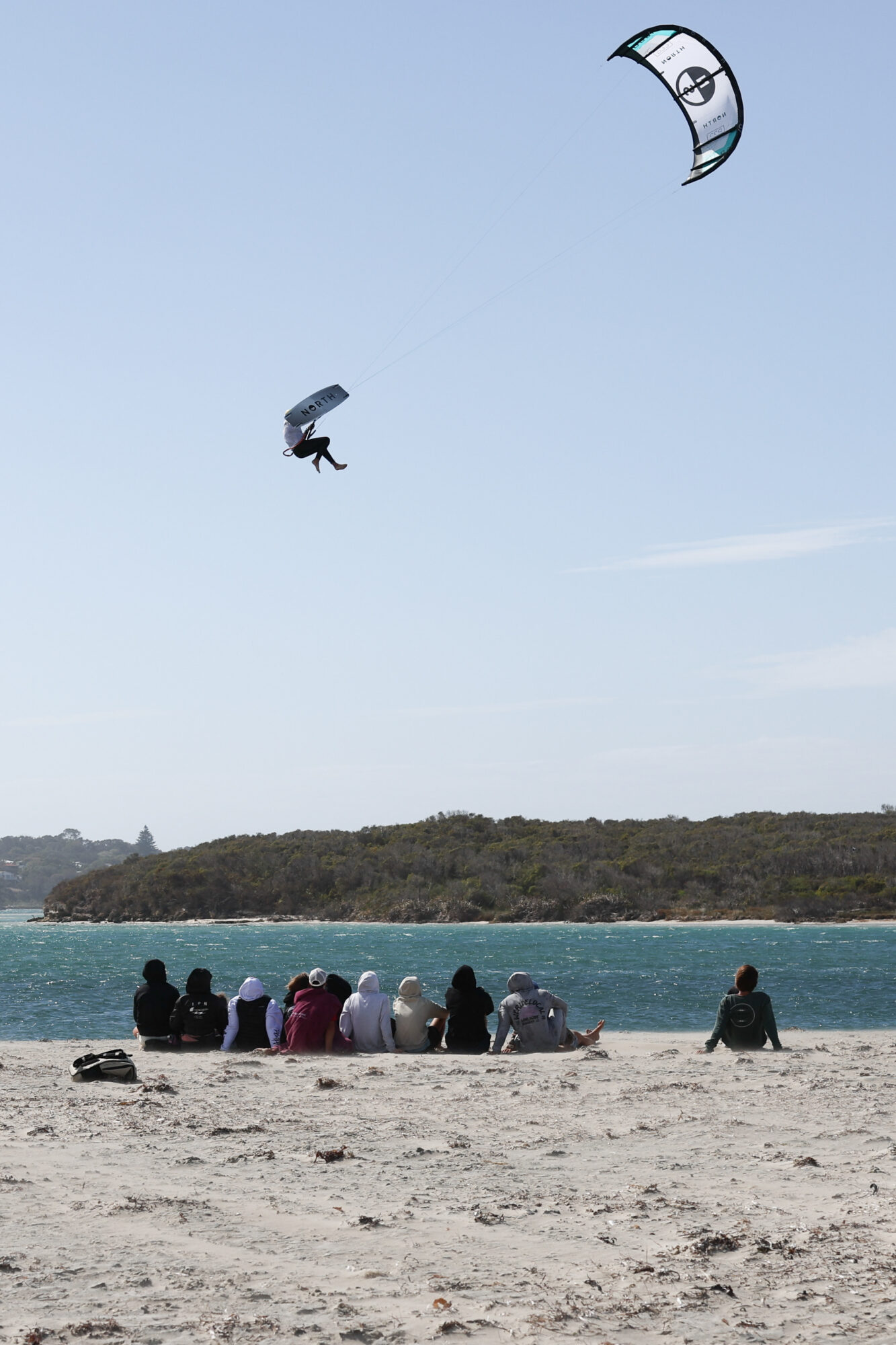
Ruben Swart, Kite, Big air
Below, we break down the equipment and skills you’ll need to get started.
The sport has plenty of disciplines to choose from — freestyle tricks, wave-riding, course racing, or simply free riding for the fun of it. A big part of kiteboarding is jumping, which happens when the kiter sends the kite skyward at just the right moment (timing is everything — ask anyone who’s gotten it wrong). Like sailing, the directions you can travel follow some fairly predictable principles, even if it doesn’t always feel that way mid-air.
The kiteboarder is the crucial link between the board and the kite — the two are never directly connected, so it’s entirely up to the rider to hold it all together (literally).
The kiter wears a harness to balance their body weight against the pull of the kite. Again, no direct link between kite and board — just a human in the middle, doing their best impression of a kite string.
Skills Required
The number one skill in kiteboarding is learning to fly the kite competently — preferably before adding a board into the mix. Once kite control is sorted, the board comes in, and the rider has to generate power at just the right time to get up and moving across the water. Keeping that power going means flying the kite in the right “zone,” continuously — slack off, and you’ll find yourself swimming instead of riding.
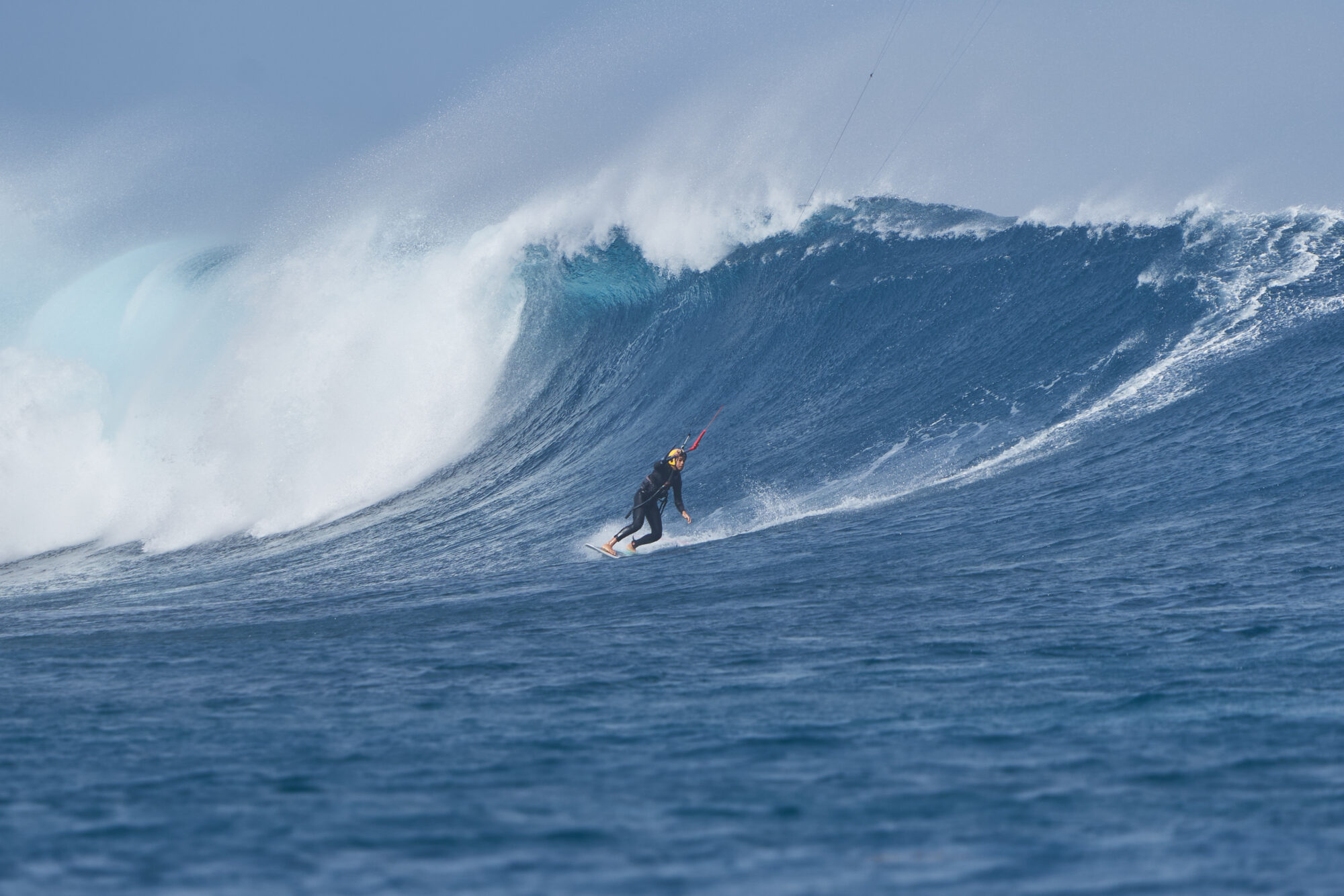
Once the basics click, riders can move on to jumps, tricks, and wave riding. Thanks to the endless creativity of the sport, there’s no real ceiling on skill progression — it just keeps evolving, much like kiteboarders’ wardrobes of increasingly colourful gear.
Equipment
The essentials: a kite, control bar and lines, a safety leash connecting the chicken loop to the harness, a harness, and a board. Forget any one of these at the beach, and it’s going to be a long, awkward drive home.
The Kite
This is your engine — except instead of fuel, it runs on wind, flying within what’s called the “Wind Window,” which has different zones of power, pull, and neutral calm (handy for when you need a breather).
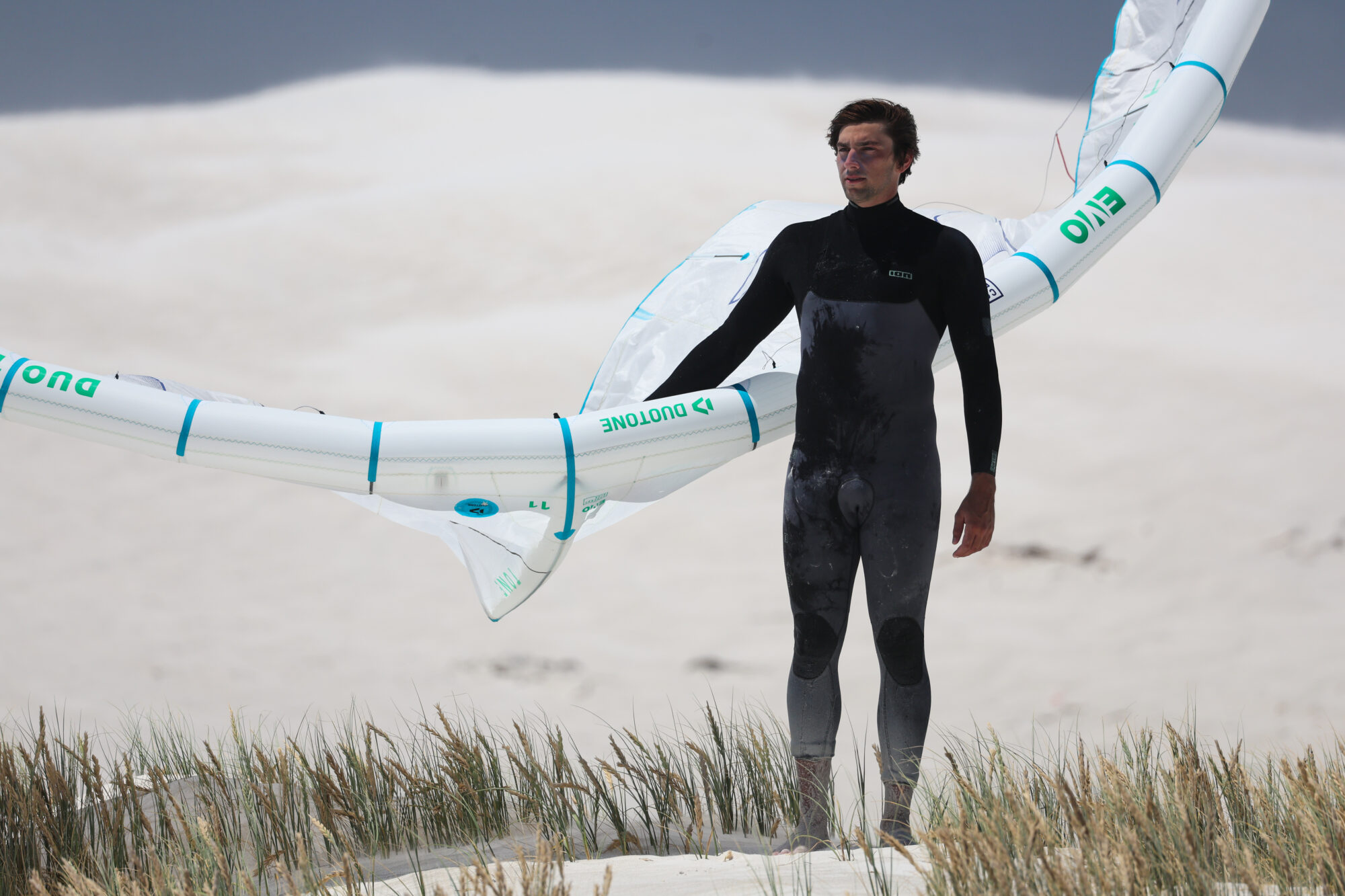
Most kitesurfing kites are inflatable, using a series of air-filled tubes to create a sail-like structure that grabs the wind. Not all kites work this way — some use solid battens or a double layer of cloth instead, held in shape by a network of bridle lines. Inflatable kites tend to relaunch more easily after a crash, which is a big reason for their popularity (and for kiters’ general sanity). There are three main types: SLE, Hybrid, and C-shape — each with its own design and flying personality.
 Control Bar and Lines
Most kites fly on a bar, fitted with a “depower” system to help keep things under control. Some kites can be flown on handles instead, but bars are far more popular since they allow easy single-handed flying — leaving your other hand free for waving at friends, adjusting your harness, or, in true kiteboarder fashion, taking a quick selfie.
The lines connecting kite to bar are made from non-stretch spectra-type material, and depending on the kite, you might have 2, 4, or 5 lines in play. Most kites run on 4 or 5-line depowerable bars, with line lengths ranging from 10m to 40m (typically 20–25m). Every bar and kite setup includes some kind of safety system, allowing you to dump all the kite’s power in an instant without releasing it completely — usually by cutting tension to all but one line, or letting the canopy “flag” harmlessly in the wind. Modern safety systems are good enough to allow quick relaunching and instant depower — basically, an emergency eject button that doesn’t actually eject you anywhere.
Harnesses
Harnesses connect the kiter to the kite’s lines and spread the load of that pull across the body (your lower back will thank you). There are two main styles: seat harnesses and waist harnesses.
Seat harnesses sit lower, wrapping around the rider’s hips with leg straps for extra support — a popular choice for beginners and anyone nursing a dodgy back. The lower hook position can also make the bar easier to reach for shorter-armed riders.
Waist harnesses sit higher, around the lower stomach, much like a weightlifter’s belt. They offer more freedom of movement, which is exactly what you want when attempting your first backroll (and exactly what you don’t want when you’re still mastering basic balance).
Boards
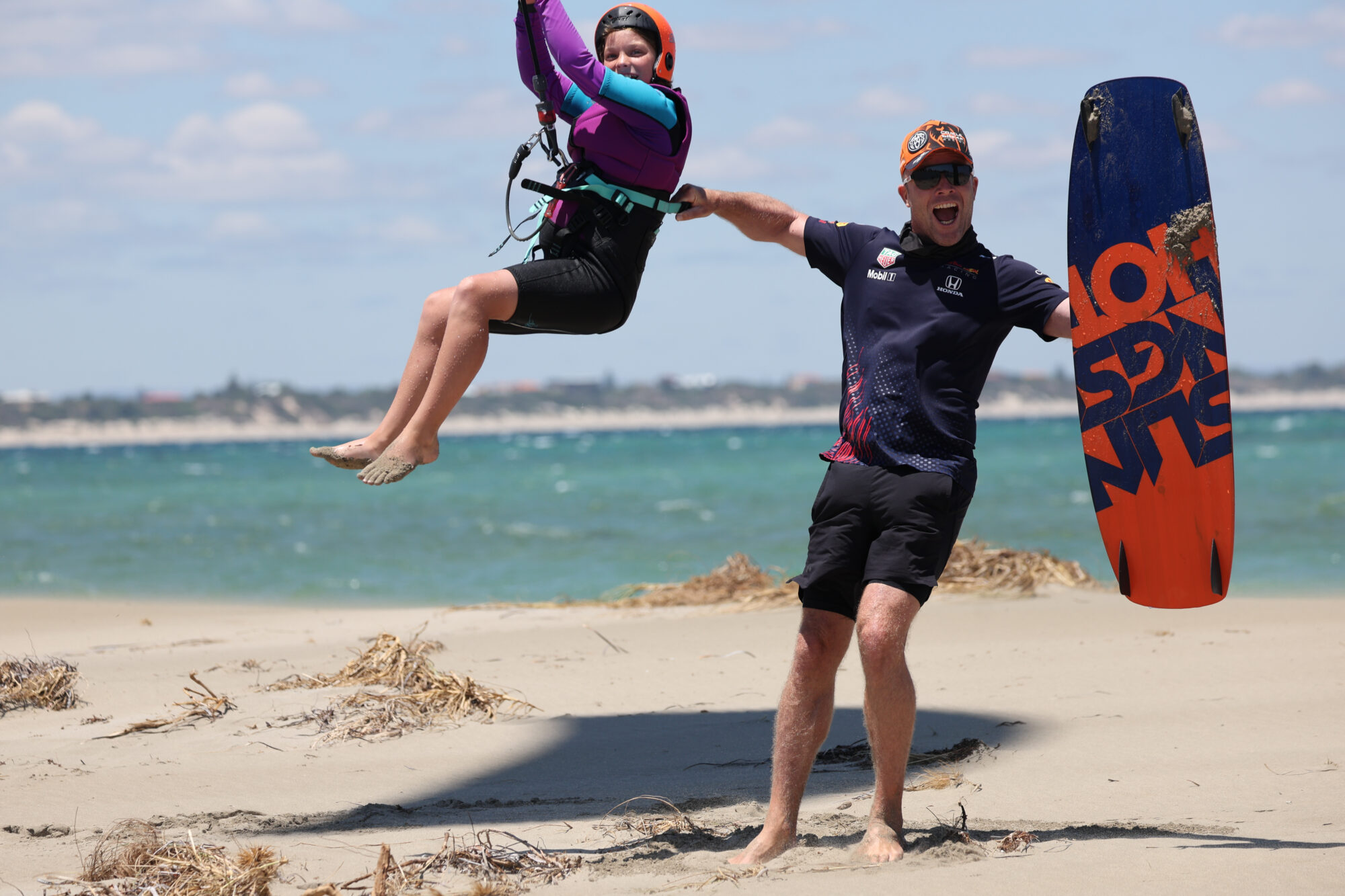
Twin Tip Boards
The most common type, twin tips are symmetrical and can be ridden in either direction — handy when your “graceful turn” looks more like an emergency stop. They range from 1.1m–1.6m in length and 0.3m–0.5m wide, typically built from snowboard-style materials like wood, carbon fibre, or volcanic basalt, with sturdy reinforced rails to survive the occasional hard landing.
Directional Boards / Kite Surfboards
These resemble traditional surfboards, ranging from 5′ to 6’2″, and can only be ridden in one direction. They can be ridden with footstraps or strapless, and are the board of choice for wave riding or open ocean sessions — for those who like their kiteboarding with a side of “surf cred.”
Both board types use fins for grip, although some riders remove the fins from their twin tips when hitting ramps or park-style obstacles — because nothing ruins a trick faster than an uncooperative fin.
Hydrofoils / Foil Boards
The newest addition to the board family, foil boards use a hydrofoil attached via a lightweight underwater mast. This is one of the fastest-evolving corners of the sport, with constant advances in design and materials. The hydrofoil lifts the board clear of the water, cutting drag and letting riders kite in much lighter winds than twin-tips or directional boards allow — perfect for those frustrating “almost no wind” days that would otherwise mean staying on the beach.